
Pediatric Allergy and Immunology
Food, medication or insect-sting allergies; asthma, rhinitis, atopic dermatitis and hives, and children who get infections very often.
Book
A space created to support the health of children and teenagers with a comprehensive, human and highly specialized approach.
Marina Kids is the pediatric specialties unit of Hospital Marina Mazatlán, coordinated by Dr. Lizzeth Nallely Martínez Sánchez.
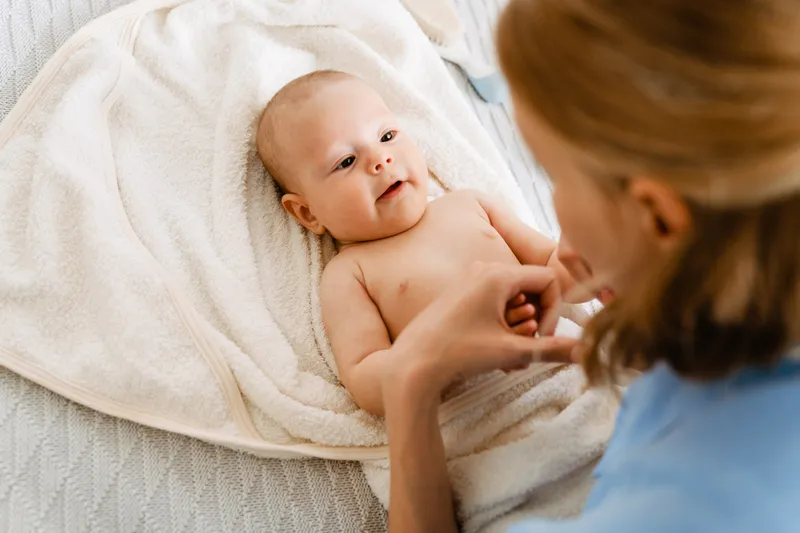

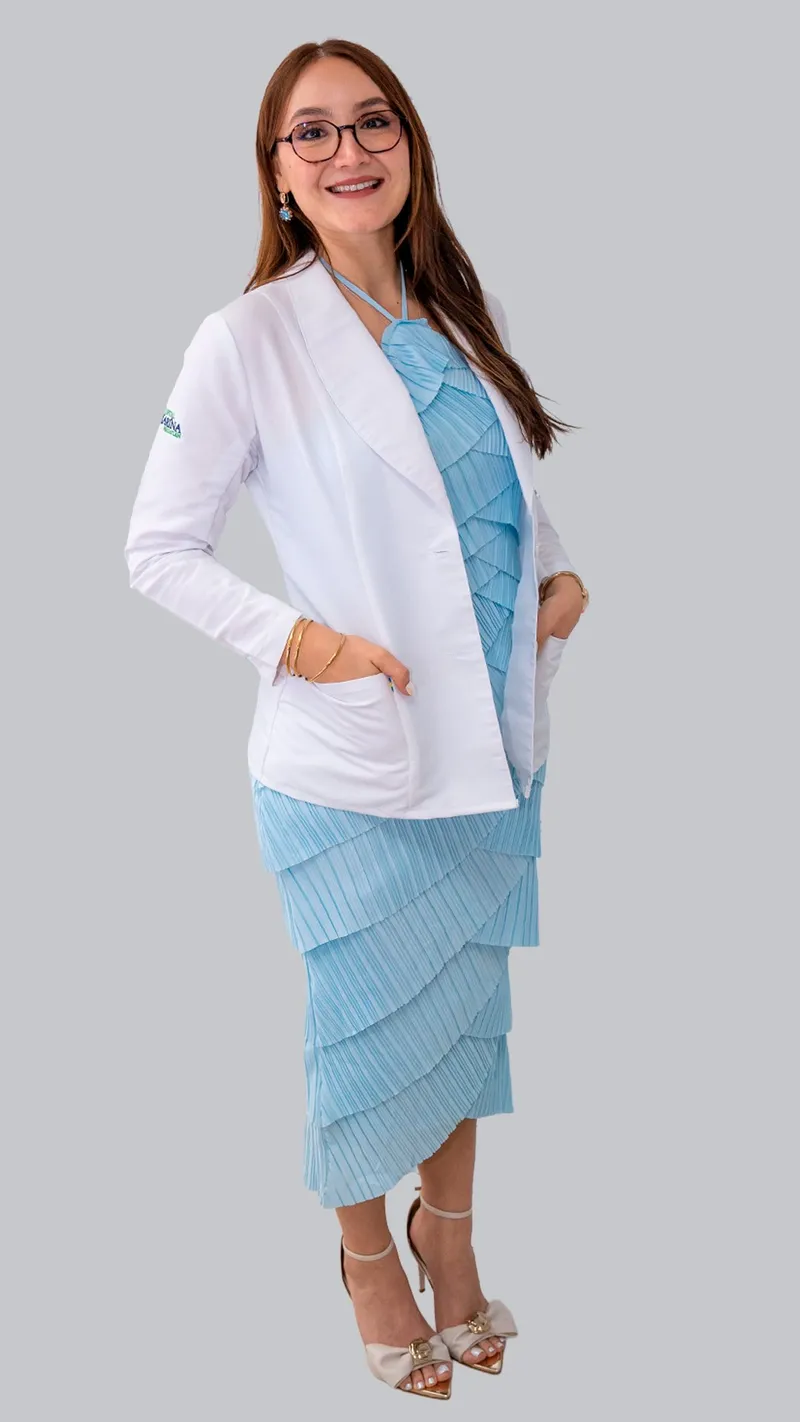
Dr. Lizzeth Nallely Martínez Sánchez coordinates Marina Kids, where pediatric specialists work together to follow up on each patient. She is a pediatrician, a pediatric oncologist and a specialist in pediatric palliative care.
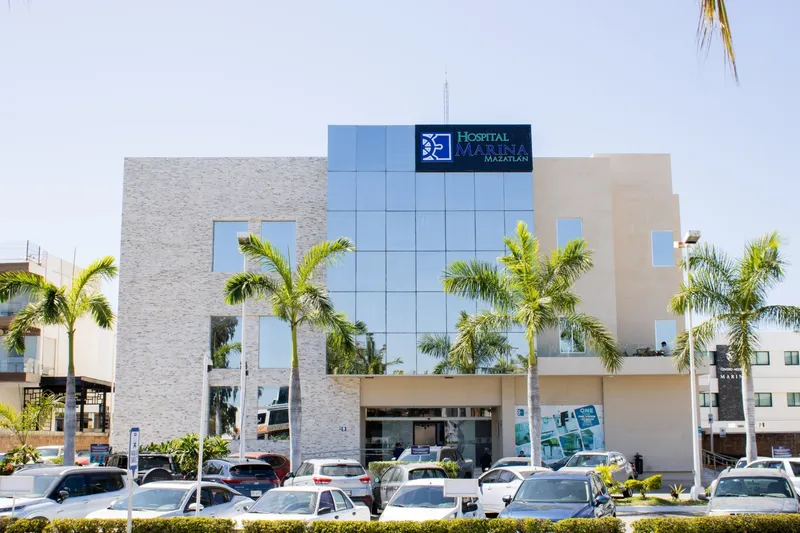
At Marina Kids we bring together pediatric specialists who work as a team to offer complete, personalized care for every patient.
Food, medication or insect-sting allergies; asthma, rhinitis, atopic dermatitis and hives, and children who get infections very often.
BookHearing, balance, voice, speech, language and swallowing.
BookSurgery for babies, children and teenagers: congenital defects, hernias, appendicitis and other surgical emergencies.
BookSupport for children and families living with a serious illness: relief from pain and other symptoms, emotional support and guidance on medical decisions.
BookGrowth, early or late puberty, thyroid, diabetes, low blood sugar and other hormone problems.
BookThe digestive system, liver and nutrition: reflux, abdominal pain, constipation or diarrhea that won’t go away, and food intolerance.
BookBlood disorders: anemia, white blood cell and platelet problems, and bleeding or clotting disorders.
BookComplicated, uncommon or recurring infections, and prolonged fever with no clear cause.
BookPremature newborns or babies born with a condition that requires special care.
The specialty that treats cancer in children and teenagers, such as leukemia, lymphoma and tumors.
BookA renovated space to care for the smallest lives.
At Hospital Marina Mazatlán we renovated our NICU to provide an environment with more technology, specialized attention and human care for newborns who need monitoring and special care.
Our goal is to support the baby and their family through a stage that requires specialized medical care, technology and, above all, a human touch.
Our specialized neonatologists are ready to support and care for the smallest lives when it matters most.
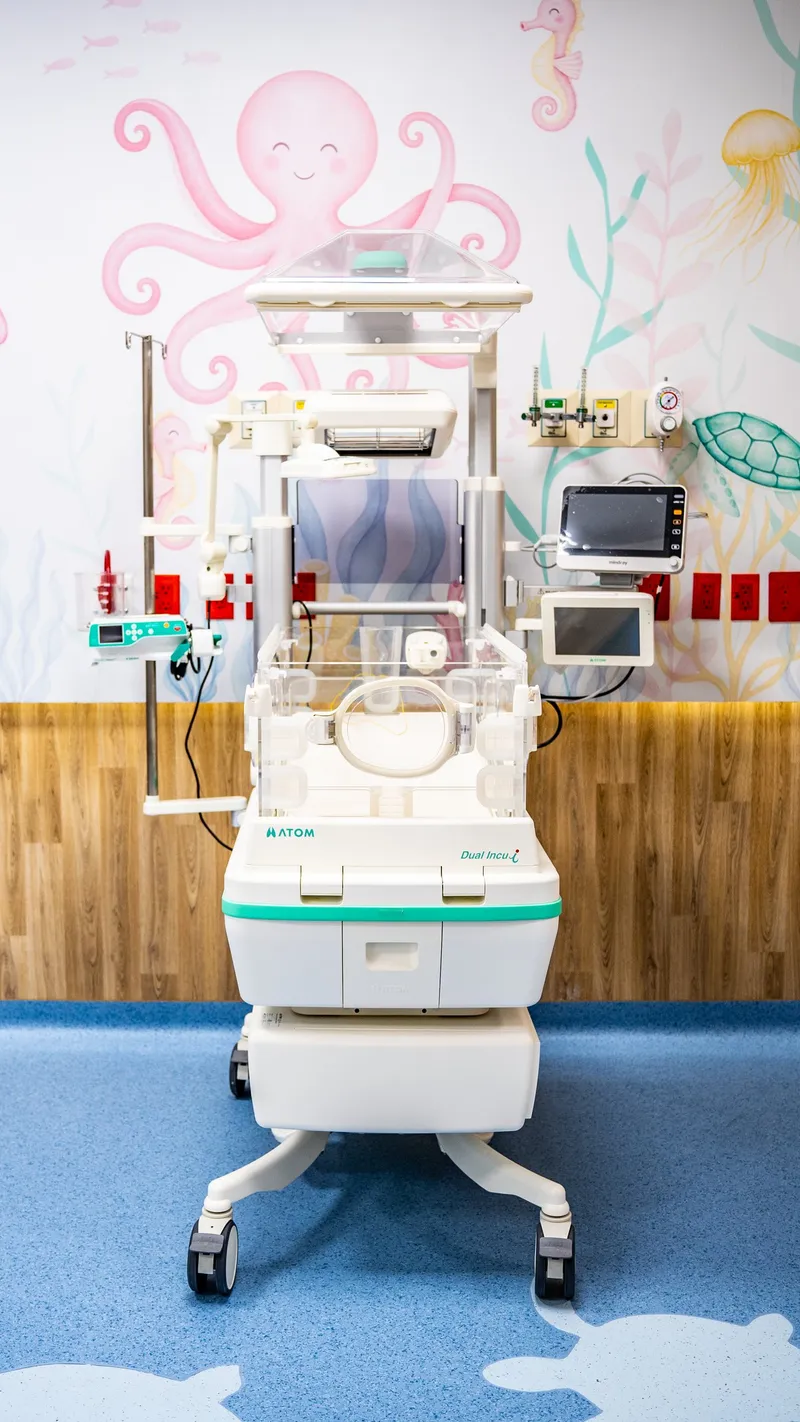

The NICU cares for newborns who arrive early or with a condition that requires special care, such as trouble breathing, jaundice, low blood sugar or an infection. It is staffed by neonatologists: pediatricians specialized in newborns.
Painless sensors measure the baby’s heart rate, breathing, oxygen, temperature and blood pressure, and bring them together on one screen so the team can see how the baby is doing at all times. Alarms are a signal for the team: not all of them mean a problem.
In a NICU, nurses are the constant presence by the baby’s side: they look after temperature, feeding and hygiene, and help prevent infections.
Incubators that keep the warmth and humidity the baby needs, monitors and breathing support equipment, in a renovated unit with under-the-sea murals, designed for the baby and their family.
The NICU is inside a hospital with 24-hour emergency care for adults and children, operating rooms, laboratory, imaging, intensive care and obstetrics. When a newborn needs a test, surgery or another specialist’s assessment, having those services in the same building avoids a transfer.
The unit is part of Marina Kids, the hospital’s pediatric specialties unit, where neonatology works together with the other subspecialties to follow up on each patient.
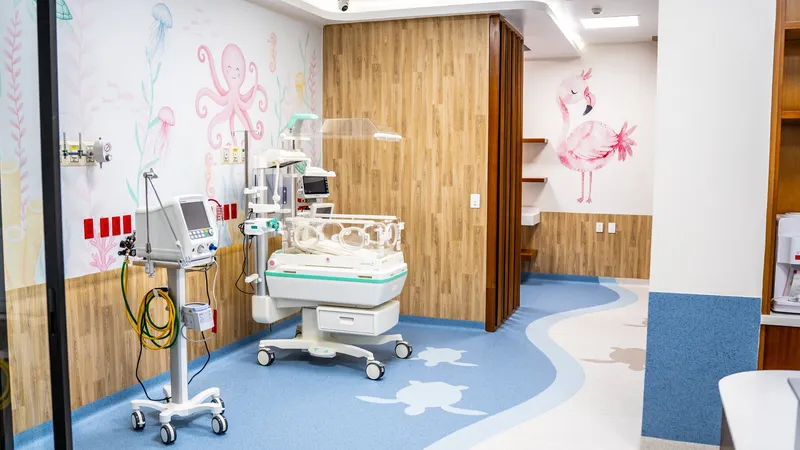
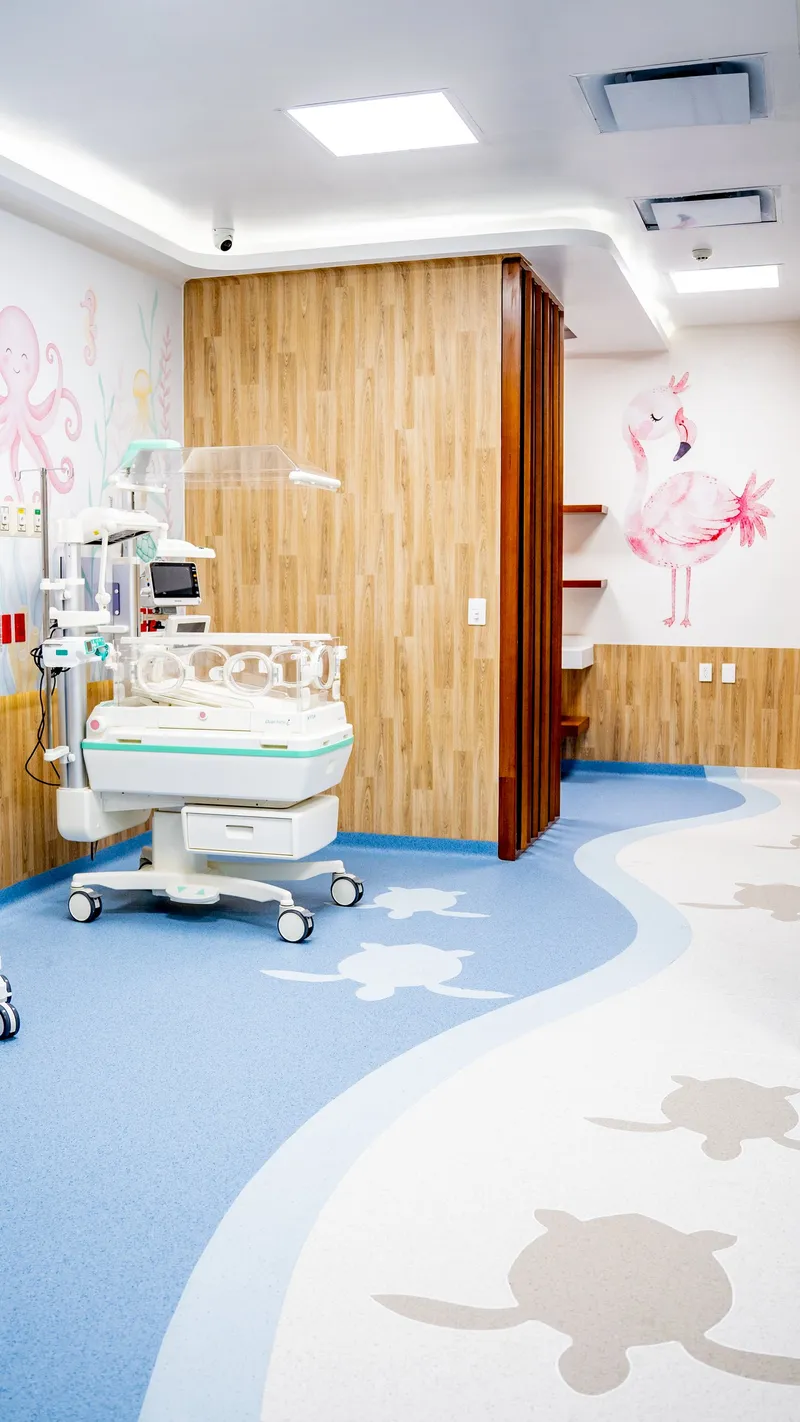
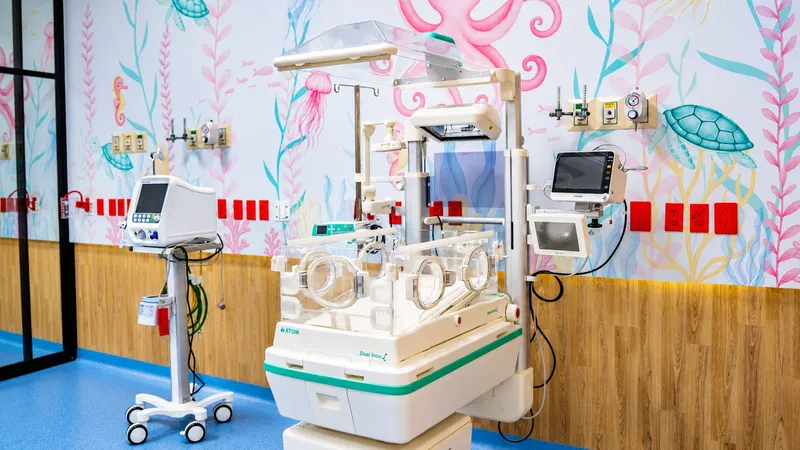
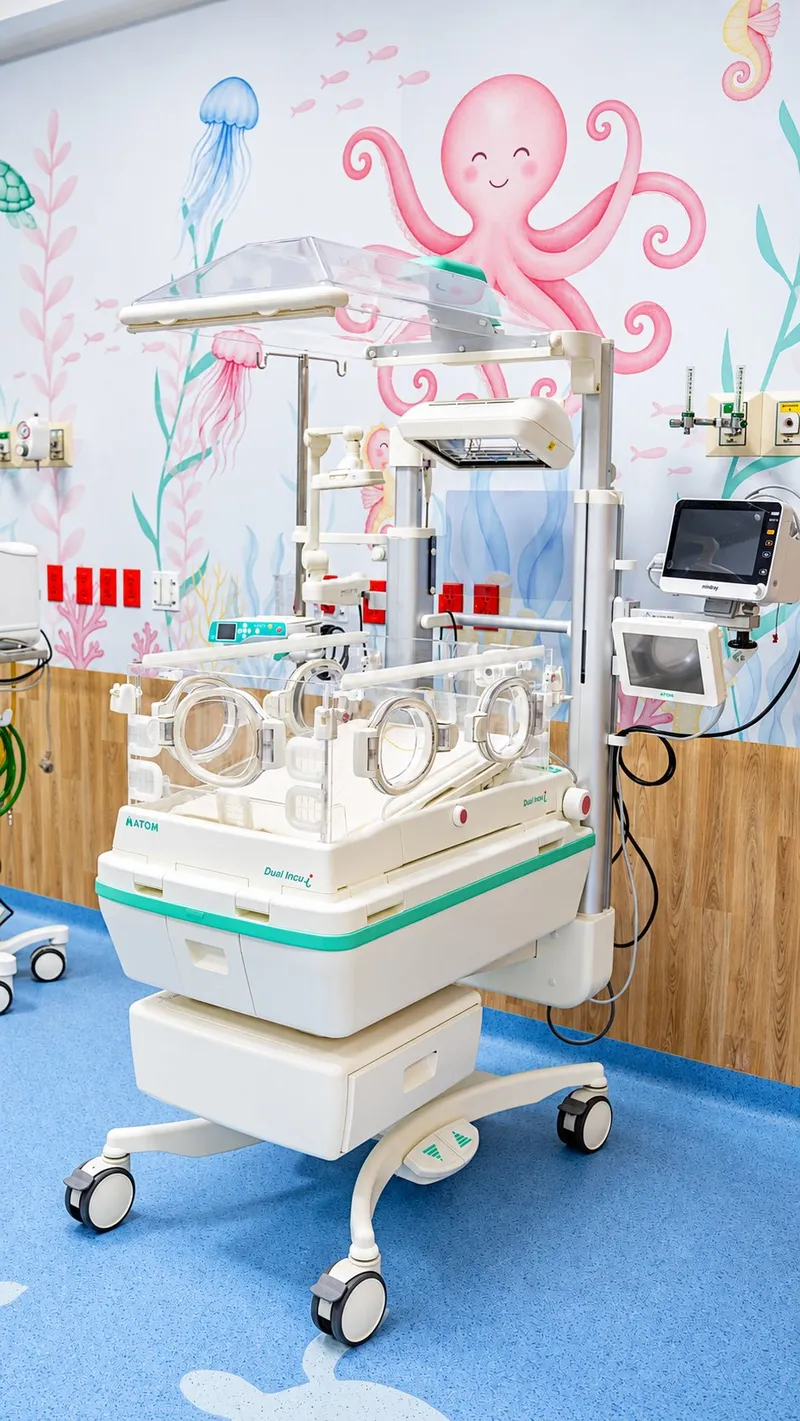
Incubator. A clear, closed crib that keeps the right warmth and humidity.
Monitor. A screen that shows the baby’s heart rate, breathing, oxygen and temperature.
Ventilator. Equipment that helps the baby breathe when they can’t yet do it on their own.


More technology. More specialization. The same human care.
Pediatric specialists who work as a team, backed by Hospital Marina Mazatlán.
Having a baby in intensive care is one of the most intense experiences a family can go through. Knowing what to expect helps.
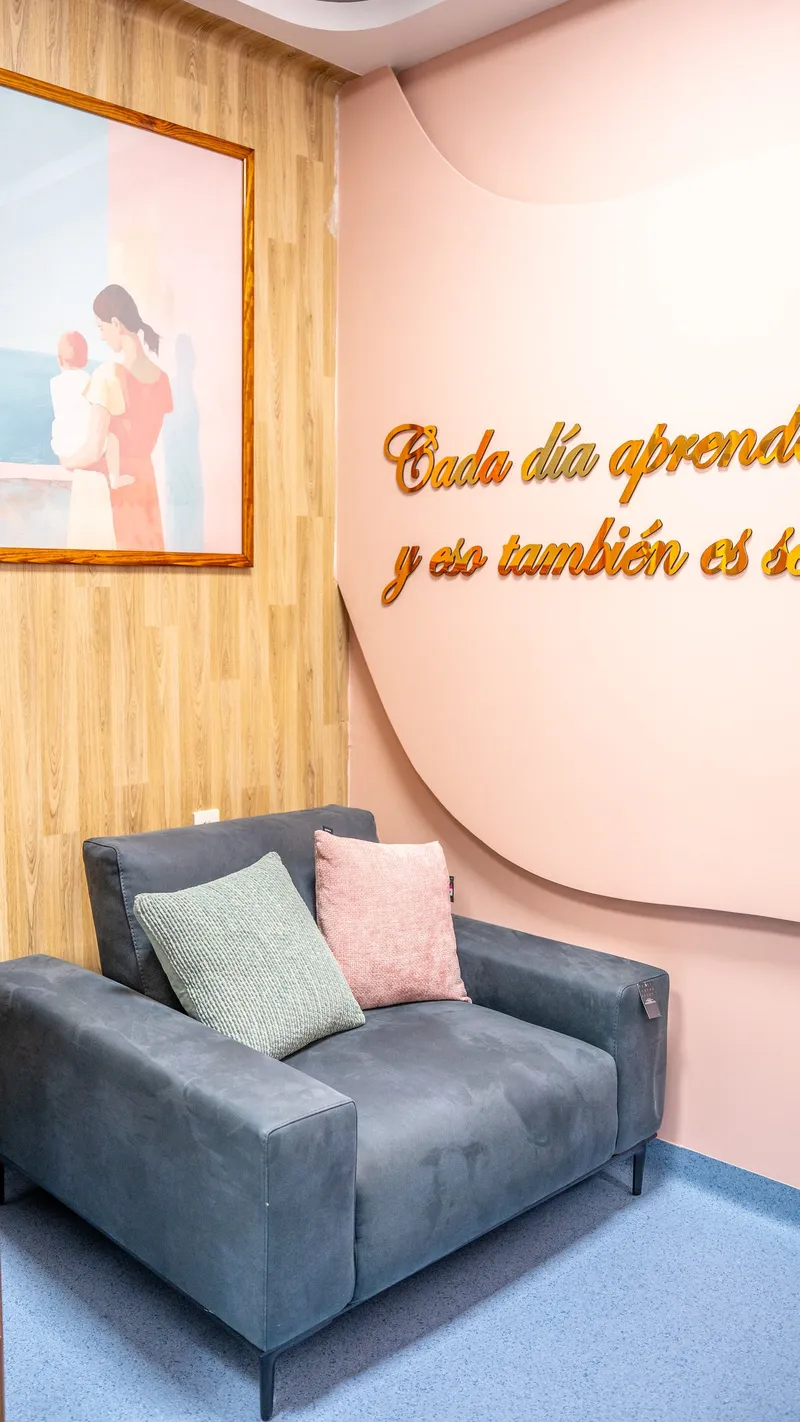
The World Health Organization and the American Academy of Pediatrics recommend caring for the baby and their family as a unit. The team will tell you when and how you can touch, hold and help care for your baby.
Kangaroo care means holding the baby skin to skin on your chest. The World Health Organization recommends it for premature or small babies because it helps keep their temperature and supports breastfeeding and bonding.
If the baby can’t suckle yet, the mother can express her milk and the team gives it through a feeding tube; when the baby is ready, the team supports the move to the breast.
In general, a baby is ready to go home when they keep their temperature, feed, breathe without support and gain weight. Before discharge, the team teaches the family how to care for the baby at home.
At Hospital Marina Mazatlán we held the first Baby Day by Marina Kids, a gathering created to bring information, guidance and specialized services to expecting mothers, first-time moms and families.
During the day, attendees joined talks and activities with specialists on pregnancy, birth, breastfeeding, physical therapy, nutrition and a baby’s first care.
Follow Marina Kids on Instagram @marinakidsmzt 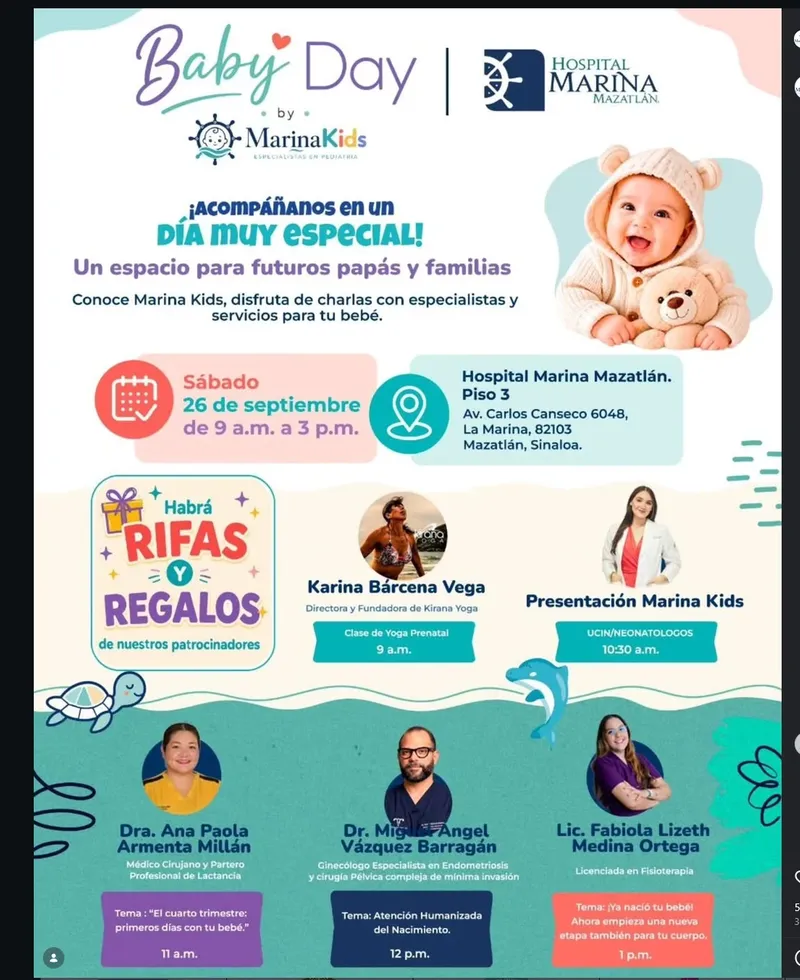
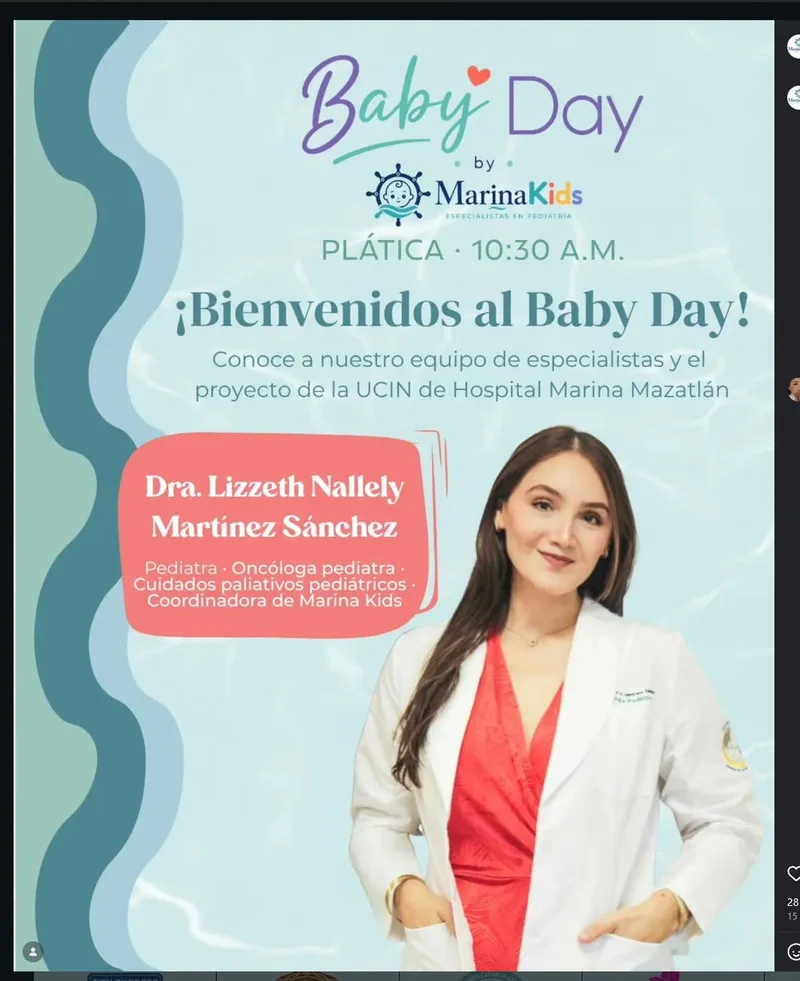
It is a hospital unit for newborns who need specialized care and continuous monitoring, staffed by doctors and nurses 24 hours a day.
The most common reasons are being born early, trouble breathing, jaundice, low blood sugar, an infection or needing observation after a difficult birth. Your baby’s doctor will explain the reason in your case.
They are painless sensors. They measure heart rate, breathing, oxygen, temperature and blood pressure, and show them on a screen so the team can see how your baby is doing at all times.
They alert the staff to check on the baby. Some go off for simple reasons, like a sensor that moved. If something worries you, ask the nursing team.
In most cases yes, gradually: at first perhaps only through the incubator openings and, as the baby stabilizes, holding them and helping with their care. The team will tell you when.
In general, yes. You can express your milk and the team gives it through a feeding tube; when the baby is ready, they support you in moving to the breast.
These are tests done on newborns to detect early conditions that aren’t visible at birth. The heel blood test is taken in the first days of life; the hearing and heart tests, before discharge.
A neonatologist is a pediatrician with additional training in newborn care, especially premature babies or those with conditions that need special care. A pediatrician follows your child’s overall health.
Usually when the pediatrician recommends it because a problem needs a more specialized assessment, for example recurring infections, growth problems or severe allergies.
No. Pediatric palliative care relieves pain and other symptoms and supports the family. It can be given at any stage of a serious illness and alongside treatments aimed at a cure.
Message us on WhatsApp at 669 224 2230 with the specialty you are looking for.
Call the Hospital Marina Mazatlán Emergency Room, open 24 hours for adults and children: 669 989 3336. We are at Av. Dr. Carlos Canseco 6048, Fracc. La Marina, Mazatlán.
Message us on WhatsApp and we’ll guide you to the specialty you need.
Write to us and we’ll continue the conversation on WhatsApp.